


Why Alabama Is Central to the Voting Rights Act
Alabama is back at the center of the national conversation around the Voting Rights Act, redistricting, and Black political representation. Recent Supreme Court action involving Alabama’s congressional map has renewed attention on a question that has shaped American democracy for generations: how much political power Black voters are allowed to hold in the places where they live.
The issue is not only about one state or one election map. Alabama carries deep historical weight because the fight for voting rights there helped push the federal government to pass the Voting Rights Act of 1965. From Selma to modern redistricting cases, Alabama remains one of the clearest examples of why voting rights have always mattered to Black freedom, citizenship, and representation.
The Voting Rights Act Was Created to Stop Racial Discrimination in Voting

The Voting Rights Act of 1965 is one of the most important civil rights laws in American history. Signed into law by President Lyndon B. Johnson on August 6, 1965, the law was created to stop discriminatory voting practices that had been used to keep Black citizens from voting, especially in Southern states.
Before the Voting Rights Act, many Black voters faced barriers such as literacy tests, intimidation, poll taxes, and unfair local rules designed to block political participation. These tactics were not accidental. They were part of a larger system meant to limit Black power after the Civil War and weaken the promise of the 15th Amendment.
The Voting Rights Act changed that by giving the federal government stronger tools to challenge racial discrimination in voting. It became a legal shield for Black voters and a major victory of the civil rights movement. But the law was not created in isolation. Alabama helped force the country to confront the reality of voter suppression.
Why Alabama Matters to the Story
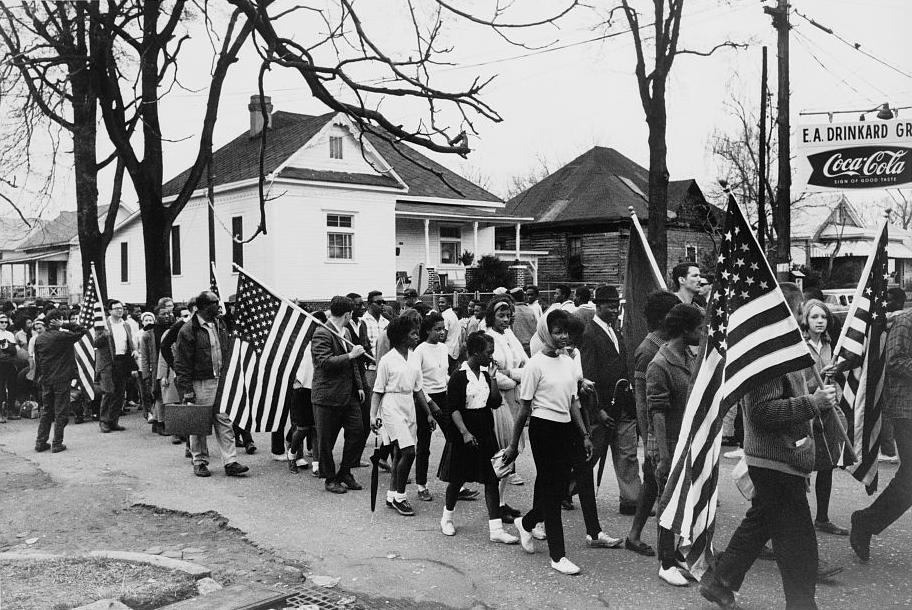
Alabama is central to the history of the Voting Rights Act because of Selma. In 1965, civil rights organizers and ordinary Black citizens in Selma were fighting for the basic right to register and vote. Their struggle became national news after peaceful marchers were violently attacked on March 7, 1965, on the Edmund Pettus Bridge, an event remembered as Bloody Sunday.
The images from Selma shocked the country. They showed Americans that voting rights were not an abstract legal issue. Black citizens were being beaten, threatened, and denied access to the ballot for demanding rights that should have already been protected under the Constitution.
That moment helped build national pressure for federal action. The Voting Rights Act was signed into law just months later. Alabama, and especially Selma, became inseparable from the story of Black voting rights in America.
What Section 2 of the Voting Rights Act Means
Section 2 of the Voting Rights Act is one of the law’s most important remaining protections. In plain language, Section 2 prohibits voting practices, rules, and district maps that discriminate on the basis of race, color, or membership in certain language minority groups.
In redistricting cases, Section 2 often comes up when a map weakens the voting power of a racial minority group. This is sometimes called vote dilution. A district map can dilute Black voting power when it splits Black communities apart or packs them into too few districts, limiting their ability to elect representatives of their choice.
That is why Section 2 matters in Alabama. The debate is not only about the shape of congressional districts. It is about whether Black voters have a fair opportunity to influence elections and gain meaningful representation.
Why Alabama Voting Rights Are Back in the News

Alabama voting rights are back in the news because of recent legal battles over the state’s congressional map. The Supreme Court recently halted a lower-court order that had required Alabama to use a map with two largely Black congressional districts. That action opened the door for Alabama to move toward a map with only one such district.
This matters because Black residents make up a significant share of Alabama’s population. When a state with a large Black population has only one district where Black voters can realistically elect a candidate of their choice, critics argue that Black political power is being unfairly limited.
The Alabama case also connects to a larger national fight over the Voting Rights Act, racial gerrymandering, and redistricting. Recent Supreme Court decisions have made the legal landscape more complicated, especially when states argue that drawing districts to comply with the Voting Rights Act gives too much consideration to race.
That tension is the heart of the current debate. The Voting Rights Act was created to protect minority voters from discrimination, but courts are now wrestling with how far states can go when using race-conscious districting to protect fair representation.
Why This Is About Black Political Power
Redistricting can sound technical, but the real issue is power. District lines help decide whose votes count together, whose communities stay connected, and whose voices are strong enough to shape elections.
For Black communities, voting rights have always been tied to more than Election Day. The ballot affects schools, housing, policing, health care, jobs, public funding, and the ability to hold elected officials accountable. When Black voting power is weakened, the effects reach far beyond politics.
That is why Alabama remains such an important symbol. The state represents both the historic struggle for Black voting rights and the modern fight over representation. Selma showed the country what voter suppression looked like in the open. Today’s redistricting cases show how the fight can continue through maps, courts, and legal language.
The Voting Rights Act as Black History and Cultural Memory
The Voting Rights Act is not just a legal document. It is part of Black history and cultural memory. It carries the memory of marches, churches, organizers, students, elders, signs, songs, speeches, and ordinary people who risked their safety for the right to vote.
Black voting rights are also part of a larger tradition of cultural expression. Protest signs, campaign buttons, political posters, freedom songs, and clothing have all been used to communicate resistance and pride. Style has often carried messages that words alone could not hold.
That is why voting rights still show up in art, music, fashion, and streetwear. A message on a shirt can become a reminder that history is not finished. It can say that the fight for representation did not end in 1965, and that Black political power still has to be defended.
Wearing the Message Today
That history is why the message behind the Alabama Voting Rights Act T-Shirt matters. It connects Alabama’s civil rights legacy to the ongoing fight over Black voting power, representation, and the right to be heard.
The design speaks to the long relationship between the ballot and Black self-determination. It is not just about remembering the Voting Rights Act of 1965. It is about recognizing why the issue still matters in Alabama today.
For those who see clothing as a way to carry history, the Alabama Voting Rights Act T-shirt turns a political message into something visible. It reflects the belief that voting rights are not only part of the past. They are part of the present fight for power, dignity, and representation.
Explore more designs rooted in civil rights history and Black cultural memory in our Black History Collection.
The Voting Rights Act Is Not Just History
Alabama’s connection to the Voting Rights Act runs from Selma to the present. The state helped expose the violence and injustice behind voter suppression in the 1960s, and it remains central to modern debates over redistricting, Section 2, and Black political representation.
The Voting Rights Act of 1965 was a landmark achievement, but its meaning has always depended on enforcement. Laws can protect rights, but people still have to defend them. Courts, legislatures, organizers, voters, and communities all shape whether those rights remain strong.
That is why Alabama remains central to the Voting Rights Act. The state is not only part of the history. It is part of the ongoing question of whether Black voters will have fair access to political power in America.
Sources
- National Archives: Voting Rights Act of 1965
- The Martin Luther King, Jr. Research and Education Institute: Selma to Montgomery March
- U.S. House History: Selma and the Voting Rights Act of 1965
- U.S. Department of Justice: Section 2 of the Voting Rights Act
- Associated Press: Supreme Court halts order for Alabama to use U.S. House map with two largely Black districts